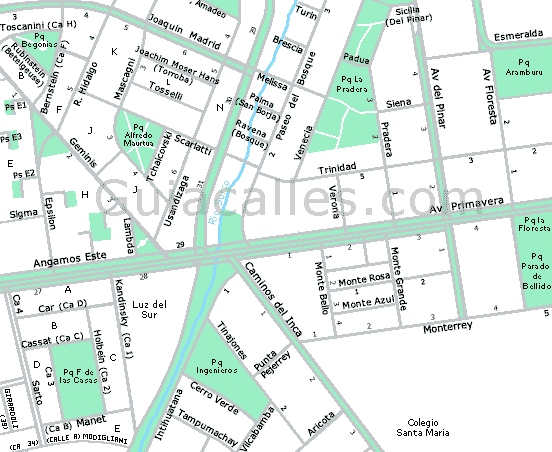
 The First Five Blocks of Avenida Primavera.
This map shows where Avenida Angamos Este changes
name to become Avenida Primavera.
Maps from Guía de Calles Lima y Perú 2006.
The ten blocks between Caminos del Inca and the Panamericana Sur have become a new culinary hotspot in Lima, with numerous dining options all of very good quality.
 Blocks Six to Ten of Avenida Primavera.
This map shows Avenida Primavera as it
approaches the Panamericana Sur.
Maps from Guía de Calles Lima y Perú 2006.
The following is an unofficial, informal translation of an article that appeared in El Comercio in January, 2006.
The Pleasure of the Palate
From El Comercio, 01/23/06.
Original article: El Comercio.
There's a new foodie corridor in Lima.
The area between San Borja and Santigo de Surco has become an unexpected garden of culinary delights for all tastes and budgets, home to some of Lima's best restaurants, pizzerias, bodegas, and cafes.
A tasting tour along Avenida Primavera is well-rewarded.
There is a restaurant to satisfy any craving or desire, whether it's breakfast, lunch, dinner, or even the intense pleasure of an afternoon lonche (Peruvian tea time).
 Pastelería San Antonio.
Photo: Oscar Roca in El Comercio.
Located along Avenida Primavera are some classic Lima restaurants, such as José Antonio, home of the best lomo saltado in the city. The pastry shop Pastelería San Antonio was one of the first establishments to arrive to this area now rich with culinary alternatives.
Tanta offers Gastón Acurio's delicacies at very reasonable prices. For pastas and desserts, Bodega de la Trattoria is simply spectacular. In the 600 block, we find the perfect cafe, Delicass, with its superb pastries and some of the best coffee in Lima.
 The incomparable desserts at Bodega de la Trattoria.
Photo: Germán Falcón in El Comercio.
For carnivores, the place to go is El Asador, where owners take rightful pride in their authentic Argentine asado. Or, close to the Caminos del Inca shopping center, the magnificient pizzeria Antica.
Finally, there are the pioneers, those first establishments to open in the area, such as the cafes Bocatta and Cherry, and the pastry-shop L'Hermitage (with their notable chicken fricassé empanadas and Gran Marnier truffels.)
Your table is waiting on Avenida Primavera.
Here is a list of some of the dining options along Avenida Primavera.
Antica Pizzeria
Avenida Primavera 275
Phone: 372-2698, 372-2792
Open daily 12 noon to 12 midnight.
Median price: Pizza from 22 to 39 soles.
Notes: Its pizzas (all large thin-crust) are superb. The best ones include the four cheese pizza (gongorzola, emmental, parmesan, mozarella), and the funghi and prosciutto pizza. You can also try fetuccini a la funghi i porcini, or the lomo a la pizzaiola (steak served with a pomodoro and mozarella sauce).
Bocatta
Primavera 311
Phone: 372-1426, 372-7445
Open Monday to Friday, 8 a.m. to 12 midnight. Saturday, 9 a.m. to 2 a.m.
Sunday, 9 a.m. to midnight.
Median price: 28 soles.
Note: They begin the day with special breakfast offers (all include juice and a hot beverage): choose from continental, American, Executive, French, or the Bocatta breakfast (with pancakes or French toast). Tea time begins at 4 p.m. and there are specials starting at S/.13,50 per person (a sandwich, a beverage and dessert). There is a lunch menu.
Pastelería San Antonio
Primavera 373
Phone: 372-7677, 372-7645
Open daily, 7 a.m. to 11 p.m.
Median price: 20 soles (full meal)
Note: This is a traditional eatery. All of the branches offer deli-style meats and cheeses, salads, sandwiches, fresh fruit juices, and ice cream. They also have coffee, pastries, and other desserts.
José Antonio
La Floresta 124, at the 500 block of Avenida Primavera
Phone: 372-6868, 372-7288
Open daily, 12:30 p.m. to 4:30 p.m. , and again from 7:30 to 12 midnight.
Sunday, lunch only.
Median price: 36 soles.
Note: This is a classic in the Lima restaurant scene specializing in Peruvian and International cuisine. The sampler plate, el piqueo José Antonio, and the lomo saltado José Antonio are stellar. They offer an excellent lunch buffet.
Delicass
Primavera 654
Phone: 372-5203
Open daily, 8 a.m. to 12 midnight.
Median price: 7 soles
Note: The hot and cold sandwich menu is extensive. Pastas are quite good. They also offer deliwraps (rolled sandwiches made with pita-style bread), quiches, pastries, empanadas, salads, juices, ice cream and a wide dessert list.
El Asador
Primavera 679
Phone: 372-2590
Open daily, 1 p.m. to 4:30 p.m., and again, 7:30 p.m. to 11:30 p.m.
Sunday closes at 5 p.m.
Median price: 45 soles.
Note: Specialties include meats like goat, roast suckling pig, beef, and potato soufflé Buenos Aires style. The double parilla includes chops, morcilla, chorizo, kidneys, chinchulines and gizzards, with two sides, for 66 soles.
T'anta
Primavera 692
Phone 372-3528
Open Monday to Friday 10 a.m. to 12 midnight. Saturday, 9 a.m. to 12 midnight. Sunday closes at 10 p.m.
Median price: 30 soles.
Note: Among the best options, the sandwich criollo (fine beef, onion, peppers and Dambo cheese), the tortilla madrileña, the stew with mushrooms, bacon and onion, green old-fashioned fetuccini, and for dessert, the banana manjar, maracuyá tart, and the chocolúcuma, their famous chocolate and lúcuma confection.
La Bodega de la Trattoria
Primavera 712
Phone: 372-7572
Open daily from12 noon to 1 a.m.
Median price: 30 soles.
Note: Begin with piadinas (home-baked bread with olive oil), follow with the portobello salad (arugula, asparagus, and mushroom, baked au gratin), then the Trattoria tortellini (with ragú a la bolognesa, rich with cream and mushrooms) or the tagliata di manzo (juicy steak strips with a Caesar salad and french-fried yellow potato. For dessert, try the bocanera de chocolota, a chocolate cake with a hot liquid filling, served with vanilla ice cream, almonds and other toppings.
Peru.Food@gmail.com
.
.
.
Click here for the Peru Food main page.
TAGS: Peru, Peruvian, food, cooking, cuisine, cocina, comida, gastronomía, peruana
TAGS: Peru, Peruvian, food, cooking, cuisine, cocina, comida, gastronomía, peruana